Code Smarter. Get Hired Faster.
Python Training in Chennai
- Master Python Programming Course in Chennai through guided labs where you write, debug, and ship working code every week — not slide-only theory.
- Practice Core Python, OOP, REST APIs, SQL, and Framework Basics (Django & Flask) so you can contribute to real backend and automation work confidently.
- Ship Portfolio-Ready Apps & Scripts — web modules, API services, and automation workflows that interviewers can open and review.
- Train Your Way with weekday classroom, online live, weekend, or accelerated tracks built for freshers and working professionals.
- Finish Job-Ready with mentor reviews, Python certification support, internship pathways, mock interviews, and placement assistance until you convert offers.
Start your Python career with live projects
Book a Free DemoHands-on Live
Projects
Career Mentorship
PLACEMENT OUTCOME
90% Success Rate
Course Overview
Python Course Overview
Whether you are starting from scratch or switching careers, this Python Course in Chennai teaches you to think like a developer — write clean logic, solve problems with code, and build small products that prove your skills to hiring managers.
- Core Python to Django/Flask, taught by working mentors
- Build APIs, automation scripts & deployable mini-apps
- Weekday & weekend batches — classroom or live online
- GitHub portfolio + unlimited placement mentoring
Why Learn Python?
Python rewards people who like building things. One readable language covers scripts, APIs, web backends, and automation — so you spend less time switching tools and more time shipping working code. That is why hiring managers keep posting for Python talent, and why a focused Python Training in Chennai is a practical way to enter software roles without drowning in theory.
Day to day, developers use Python to stand up services, glue systems together through APIs, clean and move data, and cut manual work with automation. Product companies and IT services alike want people who can read a requirement, write a small module, test it, and explain what they did. See local demand in Why Python Skills Are in Demand, or scan live roles on LinkedIn Python jobs.
Asmorix’s Python Training with Job Placement is built around that hiring reality: mentor-led labs, code reviews, and portfolio projects — not slide decks alone. Prefer to learn Python offline in Chennai? Classroom sessions give you live debugging help and pair-programming energy. Prefer evenings online? Same curriculum, same placement track. Book a free demo and see the teaching style before you enroll.
Chennai’s IT parks, product firms, and captive centers hire Python developers for backend, QA automation, and internal tooling. An offline Python course in Chennai with mentor feedback helps you avoid the usual self-study gaps — shallow OOP, messy project layout, shaky exception handling — that show up fast in technical interviews. Weekly assignments and review cycles keep you accountable until those habits stick.
Openings labeled Python Developer, Backend Developer, Automation Engineer, and Software Engineer remain steady on Naukri and LinkedIn. What separates shortlists is judgment: when a function is enough, when a class helps, how to name modules, and how to talk through a design choice. We train that judgment from the first week, not as an afterthought before placement drives.
Course Highlights
This Python Course in Chennai is sequenced the way junior developers actually ramp up: foundations first, then OOP and modules, then frameworks and automation, then portfolio packaging. Theory exists to unlock the next coding lab — not the other way around.
Key Highlights
- Curriculum mapped to junior Python / backend job descriptions
- Live coding labs with mentor code reviews
- GitHub-ready mini-apps, APIs, and automation scripts
- Django / Flask track plus scripting & API practice
- Debugging, testing, and PEP 8 habits from week one
- Trainers who currently ship Python in production
- Developer resume + GitHub / LinkedIn polish
- Coding-round and HR mock interviews
- Internship pathways for eligible learners
- Course completion certificate after assessed projects
- Weekday and weekend batch choices
- Classroom in Chennai or live online cohorts
- Unlimited placement assistance
We measure progress by what you can build and explain — not by how many slides you sat through. Mentors critique naming, structure, and edge cases the way a tech lead would in a real pull request.
Benefits of Learning Python
A strong Python Training Institute in Chennai should leave you with shippable skills and a clearer career map — not just a certificate on the wall.
What learners typically gain:
- Broad hiring demand for developers who can code in Python
- Competitive fresher and mid-level packages in IT hubs
- Paths into product companies, services firms, and startups
- Flexibility to specialize in web backends, automation, or data tooling
- Eligibility for remote / hybrid developer roles
- A foundation that scales into senior engineering work
- Stronger logic through daily problem-solving practice
- Ability to automate busywork others still do by hand
- Portable skills recognized across India and abroad
- A natural runway into AI, Machine Learning, and Data Science later
Freshers leave with GitHub proof of coding ability. Working professionals often use Python to automate their current role, move into backend or SDET tracks, or step into API-heavy product teams — usually with better leverage in salary conversations once projects are interview-ready.
Who Should Join This Course?
If you can show up, write code every week, and accept feedback on your scripts, you belong here. Prior programming experience helps but is not required.
- Students & fresh graduates seeking a job-ready Python developer career path
- Working professionals aiming for a career switch into software development or automation
- Non-IT backgrounds (commerce, arts, science) who want practical coding skills
- Manual testers & Excel users ready to move into automation and scripting
- Entrepreneurs & managers who want to automate workflows and understand developer output
- Career returners looking for a structured, mentor-led restart into tech
Still deciding? Check your placement eligibility with a counselor. We place you on a path that fills real gaps — and skips modules you have already mastered.
Topics Covered (Detailed Explanation)
Our curriculum covers the most widely used Python concepts and frameworks in the industry. Each topic is taught through practical coding exercises and real-world mini-projects. Jump to the visual summary in our Course Overview section.
Core Python & Syntax Fundamentals
Learn Python from the ground up — variables, data types, operators, conditional logic, loops, and functions. You will practice writing clean, readable code following PEP 8 conventions from the very first class, building habits that matter in real codebases and code reviews.
Object-Oriented Programming (OOP)
Master classes, objects, inheritance, polymorphism, encapsulation, and abstraction through practical exercises. You will build reusable, maintainable code structures the way professional developers do — applying OOP to real project scenarios rather than isolated textbook examples.
Modules, Packages & File Handling
Understand Python’s module system, the standard library, virtual environments, and pip package management. File handling covers reading, writing, and processing text, CSV, JSON, and Excel files — tasks that appear in nearly every real-world Python project.
Django / Flask & Web Basics
Get hands-on with Django and Flask to build web applications, REST APIs, and data-driven backends. You will understand routing, templates, models, views, and how web frameworks map to real product development workflows.
Automation & Scripting
Learn to automate repetitive tasks using Python — file system operations, web scraping with libraries like BeautifulSoup, browser automation with Selenium, scheduled scripts, and API integrations. Automation skills are in high demand across IT support, QA, and operations teams.
Data Libraries: Pandas & NumPy
Handle datasets, clean messy files, reshape tables, and compute aggregations using Pandas and NumPy. This optional but practical module prepares Python developers who want to work on data-heavy applications or transition into analytics or data engineering roles.
Exception Handling, Testing & Debugging
Write robust Python code with proper error handling, logging, and unit testing using the unittest framework. You will also learn debugging strategies and how to read tracebacks calmly — a skill that separates junior coders from reliable developers employers trust.
Learning Path & Curriculum Flow
You will not jump into frameworks on day one. The Python Programming Course in Chennai climbs in steps that match how a junior developer is expected to grow inside a team.
- Foundations: Python syntax, data types, control flow, and functions
- OOP: classes, inheritance, encapsulation, and design principles
- Modules & files: standard library, file I/O, JSON, CSV, and packages
- Web development: Django or Flask — routing, templates, and REST APIs
- Automation: scripting, web scraping, and API integrations
- Capstone: end-to-end project with documentation and portfolio packaging
- Career prep: resume, LinkedIn, mock interviews, and placement drives
Deadlined assignments, mentor reviews, and rework loops are part of every stage. That cadence trains the same muscle employers need: own a ticket, push a fix, respond to review comments, and ship again.
Real-Time Projects & Portfolio Building
Interviewers hire evidence, not course titles. They want to see readable Python, a running script or API, and a clear story of why you structured the code the way you did. Capstone work at Asmorix is built to give Chennai recruiters that evidence.
Project themes often include inventory tools, task bots, REST backends, scrapers, expense trackers, and light data pipelines. You practice edge cases, tests, and documentation — then publish repos that support applications on LinkedIn, Naukri, and company portals.
We coach GitHub layout, README quality, simple deploys (Heroku, Render, and similar), and a short write-up per project. In interviews you can then walk through trade-offs and impact instead of saying “I know Python” with nothing to show.
Skills You’ll Gain
By the end of this Python Certification Course in Chennai, you should leave with a toolbox that maps cleanly onto junior developer and automation job descriptions.
Technical Skills
- Core Python Programming
- Object-Oriented Design
- Web Development (Django/Flask)
- REST API Development
- Automation & Scripting
- File & Data Handling
- Unit Testing & Debugging
- Version Control with Git
- Pandas & NumPy Basics
- Deployment & Packaging
Professional Skills
- Logical Thinking
- Problem Solving
- Communication Skills
- Code Review Readiness
- Presentation Skills
- Time Management
- Team Collaboration
- Decision Making
Syntax gets you into the conversation; professional habits get you hired. We practice written clarity, calm debugging when something breaks, and explaining technical choices to people who do not write code.
Roles & Responsibilities of a Python Developer
On most teams, a Python Developer owns features and scripts end to end: design a small solution, implement it, test it, and keep it healthy after release.
Typical responsibilities include:
- Writing clean, efficient Python code
- Building and maintaining web applications
- Developing and consuming REST APIs
- Automating repetitive processes and scripts
- Writing unit tests and debugging issues
- Collaborating with front-end developers and DevOps teams
- Reviewing and refactoring code for performance
- Documenting code and project logic
- Integrating third-party APIs and libraries
- Supporting data processing and reporting tasks
You will often sit between product, QA, and ops. Smaller companies especially expect one Python person to span automation and backend work — which is why breadth in the language pays off early in a career.
Salary Trends & Career Growth in India
Pay bands move with city, stack depth, and how well you present project impact. In practice, Python developers who can demo working apps and speak clearly about design choices negotiate better offers. Chennai fresher roles sit in competitive entry bands; two to five years with Django, APIs, or automation often unlock mid-level backend or lead-track conversations.
A common ladder looks like Junior Python Developer → Python Developer → Senior / Backend Engineer → Tech Lead or Architect, with side doors into data engineering, ML engineering, or DevOps scripting. Domain knowledge in fintech, healthcare, e-commerce, or edtech raises your value because you already speak the business language behind the tickets.
Mentors help you map roles, frame impact stories, and avoid underselling yourself in offer talks. Cross-check live salary signals on LinkedIn and Naukri, then shape your portfolio toward the JDs you actually want.
How Python Skills Help You Get Remote Jobs
Backend and automation work travels well: most of it lives in repos, tickets, and pull requests. That makes Python a strong fit for distributed teams that hire beyond one office city.
Core Python plus Django or Flask, scripting, and REST APIs puts you on the shortlist for remote postings from startups, product firms, and MNCs. Start browsing on Naukri Python Developer jobs.
Remote Python Developers are typically responsible for:
- Building and maintaining backend services
- Developing automation scripts for distributed teams
- Integrating and managing third-party APIs
- Writing and running automated tests
- Documenting code for async collaboration
- Supporting data processing pipelines
Hiring managers look for people who deliver without hand-holding: clean commits, readable modules, and status updates that do not need a meeting.
Freelance gigs, short automation contracts, and cross-border remote roles also open once your GitHub and communication habits are solid. Class deliberately practices async-friendly artifacts — READMEs, commit messages, and documented APIs — because that is how remote work actually runs.
Placement Assistance & Interview Preparation
Knowing Python is only half the battle; interviews have their own rhythm. Python Training in Chennai with Placement at Asmorix wraps career coaching around the technical labs so offers become a process, not a guess.
- Resume building tailored to Python developer keywords and project impact
- LinkedIn optimization for recruiter search visibility
- Mock interviews covering Python concepts, OOP, coding exercises, and HR rounds
- HR + technical rounds practice with feedback
- Internship pathways where eligible
- Unlimited placement assistance until you are interview-ready and applying consistently
We also train you to explain projects in the STAR format (Situation, Task, Action, Result), defend code decisions, and handle live coding questions calmly. That confidence often decides the final shortlist.
Classroom vs Online Python Training in Chennai
Pick the format that matches how you learn under pressure. Offline Python training in Chennai suits people who want whiteboards, pair labs, and instant mentor feedback when a traceback appears. Live online cohorts suit working professionals who need evenings or weekends without losing the same syllabus.
Curriculum, projects, and placement support stay aligned in both modes. Choose classroom if you thrive on lab energy and same-day code reviews; choose online if your calendar needs flex — recordings and live doubt sessions keep the pace honest. Compare timings on a free demo before you lock a batch.
Companies Hiring Python Developers
From IT services giants to Chennai product startups, teams keep adding Python seats for backends, internal tools, and automation. The list below is a sample of employers that regularly post for this skill set.
Some of the leading companies hiring Python Developers include:
- TCS
- Infosys
- Cognizant
- Accenture
- Capgemini
- Wipro
- HCLTech
- IBM
- Zoho
- Freshworks
- PayPal
- Amazon
- Flipkart
- Swiggy
- Razorpay
- HSBC
- Standard Chartered
- Deloitte
- EY
- Verizon
- Ford
- AstraZeneca
- Mindtree
- Mphasis
- Hexaware
These companies recruit candidates for roles such as:
- Python Developer
- Backend Developer
- Software Engineer
- Automation Engineer
- Django Developer
- Flask Developer
- API Developer
- Data Engineer
- Test Automation Engineer
- Full-Stack Developer (Python)
With assessed projects, interview practice, and a clear application plan, freshers can compete for entry-level Python developer jobs in Chennai. Experienced switchers often aim higher — senior developer, tech lead, or backend architecture tracks — once their portfolio matches the role.
Frequently Asked Questions
Do I need prior coding experience to join?
No. Beginners start with variables, types, and control flow inside a Python Course for Beginners in Chennai track, then move into OOP and frameworks only after the basics feel natural. Showing up and practicing weekly matters more than what you coded before.
Is this course suitable for non-IT students?
Yes. Commerce, arts, science, and operations graduates regularly succeed here. Classes emphasize writing working programs and fixing real bugs — not abstract CS theory for its own sake.
Will I get placement support?
Yes. The Python Course in Chennai with Placement covers resume polish, mock interviews, and unlimited placement assistance while you apply for developer and automation openings.
What is the difference between Python for web development and Python for data?
Web-focused Python leans on Django or Flask, REST APIs, and backend structure. Data-focused Python leans on Pandas and NumPy for tables and transforms. Advanced Python Training in Chennai exposes both so you can pick the track that matches your target role.
Can I attend weekend batches?
Yes. Saturday–Sunday cohorts run alongside weekday options for people who cannot leave office hours. Ask for the current weekend calendar when you book a free demo — seats and start dates change by month.
Take the Next Step
Asmorix Python Training in Chennai is built for people who want to code for a living: live labs, portfolio projects, interview drills, and placement mentoring until you are applying with confidence. Whether you target a services giant, a product startup, or an MNC captive center, you leave with skills hiring managers can verify.
Ready for Python Training in Chennai with Placement, prefer to learn Python offline in Chennai, or simply want a mentor-led path into software and automation? Scan market demand, review the skills you will master, then check your placement eligibility and start building like a developer.
Dedicated Placement Support
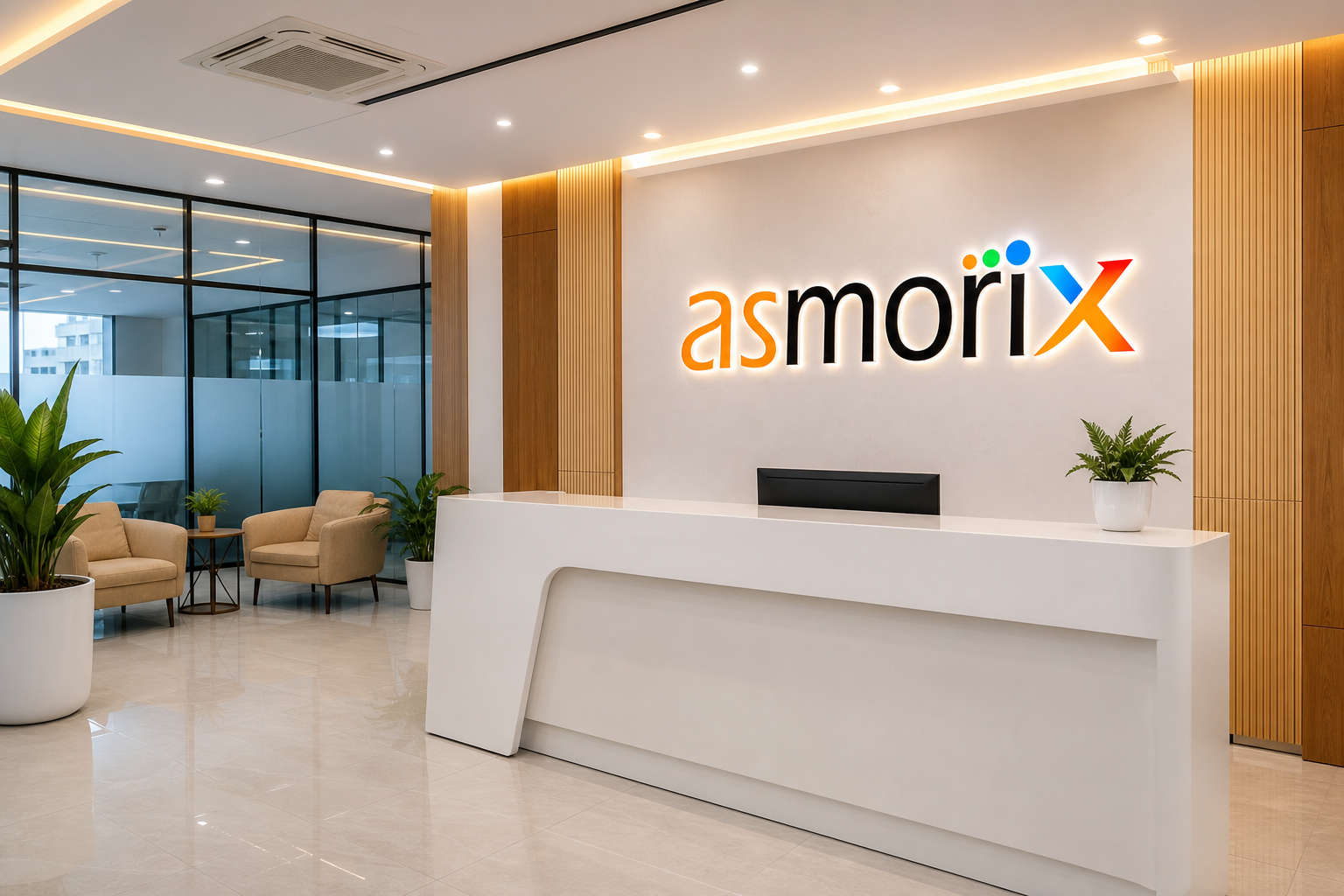
After your Python labs, our career team helps you get interview-ready. We polish your resume around real projects, practice coding and HR rounds, and connect you with companies hiring Python developers, automation engineers, and junior backend roles in Chennai.
Upcoming Batches For Classroom and Online
Can’t find a batch you were looking for?
Request Custom TimeTry an easy and secured way of payment
- UPI Payments
- No Cost EMI
- Internet Banking
- Credit/Debit Card
Python Course Fee Structure
Starter Path
Foundation Level
₹12,000
₹8,000
Core Python fundamentals
- Python syntax & data types
- Control flow, loops & functions
- Lists, tuples, dicts & sets
- File handling & modules
- Intro to OOP concepts
Most Popular
Advanced Level
₹40,000
₹30,000
Job-ready Python developer track
- Advanced OOP & design patterns
- Django / Flask web development
- Pandas & NumPy for data tasks
- REST APIs & automation scripts
- Live projects & portfolio building
Premium
Premium Level
₹65,000
₹50,000
Full-stack Python & AI career track
- Everything in Advanced Level
- Machine Learning with scikit-learn
- AI & automation with Python APIs
- Cloud deployment & packaging
- Capstone + interview war-room prep
Trusted Python Training Institute in Chennai
Students choose Asmorix for clear Python teaching, live projects, and honest placement help. Check our ratings before you join a Python Course in Chennai.
Google Reviews
YouTube Feedback
Facebook Ratings
Justdial Score
Tools Covered in Our Python Course in Chennai
Python
VS Code / PyCharm
Git / GitHub
Django / Flask
MySQL / PostgreSQL
Pandas / NumPy
Selenium / Requests
Jupyter
Who Should Take a Python Course in Chennai
Job Roles After Python Certification
Python Programming Course Syllabus
This roadmap moves you from first scripts to interview-ready deliverables. You start with Python fundamentals, then layer OOP, data structures, file I/O, and databases before building Flask and Django apps, REST APIs, and tests. Capstone projects plus placement mentoring turn each module into proof you can show hiring teams hunting for a Python Developer in Chennai.
- 01 — Python Fundamentals Introduction to Python
- What is Python?
- Why Python for Development
- Python Use Cases & Industry Applications
- Python vs Other Programming Languages
- Python Developer Roles & Responsibilities
- Career Opportunities in Python
- Setting Up the Python Environment
Core Python Syntax- Variables & Data Types
- Type Casting
- Operators & Expressions
- String Formatting
- Input & Output
- Comments & Documentation
Control Flow- if / elif / else Statements
- for Loops
- while Loops
- break, continue & pass
- Nested Loops
- Loop Comprehensions Overview
Functions- Defining & Calling Functions
- Arguments & Return Values
- Default Arguments
- *args & **kwargs
- Lambda Functions
- Recursion
- Built-in Functions
- Scope & Namespaces
- 02 — Object-Oriented Programming (OOP) OOP Concepts
- Classes & Objects
- __init__ Constructor
- Instance vs Class Attributes
- Instance, Class & Static Methods
- self Keyword
OOP Pillars- Encapsulation
- Inheritance & Multiple Inheritance
- Polymorphism
- Abstraction
- Method Overriding
- super() Function
Advanced OOP- Dunder / Magic Methods
- Operator Overloading
- Property Decorators
- Class Decorators
- Abstract Base Classes
- Mixin Patterns
- 03 — Data Structures & Algorithms Built-in Data Structures
- Lists — Creation, Indexing, Slicing, Methods
- Tuples — Immutability & Use Cases
- Sets — Unique Values & Set Operations
- Dictionaries — Key-Value Pairs & Methods
- Nested Data Structures
Comprehensions & Generators- List Comprehensions
- Dictionary Comprehensions
- Set Comprehensions
- Generator Expressions
- yield Keyword
- Iterators & Iterables
Algorithm Basics- Searching Algorithms
- Sorting Algorithms
- Recursion Problems
- Time & Space Complexity Basics
- Common Coding Interview Problems
- 04 — Modules, Packages & Standard Library Modules & Packages
- Importing Modules
- Creating Custom Modules
- __name__ == "__main__"
- Package Structure
- __init__.py
- Virtual Environments
- pip & Dependency Management
Standard Library Essentials- os & sys
- datetime
- math & statistics
- random
- json
- re (Regular Expressions)
- collections (defaultdict, Counter, deque)
- itertools & functools
- 05 — File I/O & Exception Handling File Handling
- Opening & Closing Files
- Reading Files — read(), readline(), readlines()
- Writing & Appending Files
- Working with CSV Files
- Working with JSON Files
- File Path Handling with pathlib
- Context Managers (with statement)
Exception Handling- try / except / else / finally
- Catching Specific Exceptions
- Raising Exceptions
- Custom Exception Classes
- Logging Errors with logging module
- Debugging Techniques
- 06 — Database Programming with Python SQL Databases
- Relational Database Concepts
- MySQL with mysql-connector-python
- SQLite with sqlite3
- CRUD Operations from Python
- Parameterized Queries
- Transaction Management
ORM & Advanced DB- Introduction to SQLAlchemy
- Defining Models
- Querying with ORM
- Relationships & Foreign Keys in ORM
- Migrations Overview
- PostgreSQL Basics
NoSQL Basics- MongoDB Concepts
- pymongo Integration
- CRUD with MongoDB
- When to Use NoSQL vs SQL
- 07 — Web Development with Flask Flask Basics
- Flask Installation & Setup
- Routing & URL Rules
- HTTP Methods — GET & POST
- Request & Response Objects
- Jinja2 Templating
- Static Files
- Flask Debug Mode
Flask Advanced- Flask Forms & Validation
- Flask-SQLAlchemy Integration
- Blueprint Architecture
- Session & Cookie Handling
- Error Handling in Flask
- Flask REST API Development
- Flask Application Factory Pattern
- 08 — Web Development with Django Django Fundamentals
- Django Architecture (MVT Pattern)
- Project & App Structure
- Django Settings & Configuration
- URL Routing & Views
- Django Templates
- Static & Media Files
Django Models & ORM- Model Definition
- Django ORM Queries
- Migrations
- Admin Panel Setup
- Model Relationships
- QuerySets & Managers
Django Advanced- Django Forms & ModelForms
- Authentication & Authorization
- Django REST Framework (DRF) Basics
- Serializers & API Views
- Django Middleware
- Deployment Basics
- 09 — REST APIs & Web Scraping REST API Development
- REST Architecture Principles
- HTTP Methods — GET, POST, PUT, DELETE
- JSON Request & Response Handling
- Authentication — Basic, Token, JWT
- Building APIs with Flask & DRF
- API Testing with Postman
- Consuming External APIs with Requests
Web Scraping- HTML Structure Basics
- BeautifulSoup for HTML Parsing
- Selenium for Dynamic Pages
- Data Extraction & Cleaning
- Saving Scraped Data to CSV/Database
- Scraping Ethics & robots.txt
- 10 — Testing & Code Quality Testing in Python
- Importance of Testing
- unittest Framework
- pytest Framework
- Writing Test Cases
- Test Fixtures & Setup/Teardown
- Mocking with unittest.mock
- Code Coverage Basics
- TDD (Test-Driven Development) Intro
Code Quality & Best Practices- PEP 8 Style Guide
- Type Hints & mypy
- Docstrings & Documentation
- Linting with flake8/pylint
- Git & GitHub for Python Projects
- Code Review Best Practices
- 11 — Data Analysis with Python NumPy
- Arrays & ndarray
- Array Operations & Broadcasting
- Mathematical Functions
- Matrix Operations
- Indexing & Slicing Arrays
Pandas- Series & DataFrame
- Data Import — CSV, Excel, JSON
- Data Cleaning & Missing Values
- Filtering, Sorting & Grouping
- Merge, Join & Concat
- Pivot Tables
- Time Series Basics
Data Visualization- Matplotlib — Line, Bar, Scatter, Histogram
- Seaborn — Statistical Plots & Heatmaps
- Plotly Basics for Interactive Charts
- EDA (Exploratory Data Analysis)
- Insight Storytelling with Charts
Automation Scripts- Excel Automation with openpyxl
- PDF Processing
- Email Automation with smtplib
- Scheduled Scripts with schedule
- CLI Tools with argparse
- 12 — Real-Time Industry Projects Python Project Portfolio
- Student Management System (OOP)
- Bank Account CLI Application
- File Organizer Automation Script
- Weather App using REST API
- Web Scraper for Job Listings
- CRUD Web App with Flask & SQLite
- Blog Platform with Django
- REST API Backend with Django REST Framework
- E-commerce Product Catalog API
- Data Analysis & Visualization Dashboard
- Sales Report Generator with Pandas
- Automated Email Report Sender
- JWT Authentication API
- Unit Testing Suite for a Python App
- End-to-End Python Capstone Project
- 13 — Placement Preparation Career & Placement Prep
- Resume Building for Python Roles
- ATS Resume Optimization
- LinkedIn Profile Development
- GitHub Portfolio Setup & README Writing
- Python Coding Challenges Practice
- OOP & Design Pattern Interview Questions
- Django / Flask Interview Questions
- REST API & Database Interview Questions
- Data Structures Problem Solving
- Mock Technical Interviews
- HR Interview Preparation
- Aptitude & Logical Reasoning
- Communication Skills
- Presentation Skills
- Salary Negotiation Tips
- Freelancing & Career Guidance
Build Your Portfolio with Real-Time Python Projects
Work on industry-grade Python use cases covering web apps, APIs, automation, and data pipelines — the same problems hiring teams expect you to solve.
E-Commerce Web App with Django
Build a full-stack e-commerce platform with product listings, cart, user authentication, and order management using Django and PostgreSQL.
- Django ORM & views
- User auth & session handling
REST API Development with Flask
Design and deploy a production-ready REST API with Flask, covering JWT authentication, rate limiting, and Swagger documentation.
- Flask-RESTful & Blueprints
- JWT auth & API testing
Web Scraper & Data Aggregator
Scrape product prices, news headlines, or job listings using BeautifulSoup and Requests, then store and visualize results with Pandas.
- BeautifulSoup & Selenium
- Structured data storage
Automation Script Suite
Automate repetitive office tasks — file renaming, email dispatch, Excel report generation, and scheduled jobs — using Python scripting.
- OS, shutil & schedule modules
- openpyxl & smtplib automation
AI Chatbot with Python
Build a rule-based and NLP-powered chatbot that handles FAQs, integrates with APIs, and is deployable via a Flask web interface.
- NLTK & intent classification
- Flask webhook deployment
ETL Data Pipeline
Extract data from CSV and APIs, transform it with Pandas, and load cleaned records into a MySQL/PostgreSQL database with automated scheduling.
- Pandas ETL workflows
- SQLAlchemy & cron scheduling
Job Board Scraper & Notifier
Scrape job listings from portals, filter by keywords and location, and send daily email digests — a practical automation capstone project.
- Selenium & cron automation
- Email digest via smtplib
Getting Started With Python Course in Chennai
- Beginner Friendly
- 6 Lakhs+ CTC
- Live Project Training
- WFH Jobs (Remote)
Flexible Learning Paths
Modes of Training for Python at Asmorix
Pick the format that fits your week — campus labs, live virtual classrooms, or custom corporate cohorts. Every track still ships coding projects, mentor code reviews, and interview coaching aimed at Python Developer hiring.
Offline / Classroom Training
Code beside mentors in campus labs where bugs get fixed before class ends.
- Side-by-side mentoring from Python practitioners
- Live debugging help the moment you get stuck
- AC classrooms with machines ready for lab work
- Daily drills on core Python, OOP & Django
- Campus aptitude warm-ups before interviews
- In-person communication & storytelling practice
- Panel mocks that feel like real tech rounds
- Walk-in access to campus & partner hiring drives
- Placement mentoring until you are applying steadily
Online Training
Stay on camera with instructors — screenshare, pair, and ship assignments from home.
- Instructor-led live sessions (not binge-watch recordings)
- Raise-hand mentoring during every coding block
- Same-day clarification when a concept breaks
- Virtual mocks covering Python + HR rounds
- Shared coding pads for aptitude & logic practice
- Remote panel interviews with structured feedback
- Placement coaching synced to your batch timeline
Corporate Training
Custom online, offline, or hybrid Python programs tailored for teams.
- Trainers with real Python industry experience
- Budget-friendly plans for teams of all sizes
- Syllabus mapped to your business use cases
- Priority support throughout the engagement
- Upskilling tracks for development & automation teams
- Workshops built around live company projects
Our Hiring Partners



Our Placement Support Overview
Python Developer Salary Insights in India & Chennai
Want a realistic pay picture before you join Python Training in Chennai? These ranges show what many employers pay for coding skills — from first Python jobs to mid-level backend and automation roles. Use them to set goals, not as a fixed promise.
Start Here
0 – 1 Year
Fresher Python Developer
₹3.5 – 6 LPA
Common for new graduates who can write clean Python, finish small projects, and explain their code in interviews.
Busy Hiring Band
1 – 3 Years
Python / Backend Developer
₹6 – 12 LPA
Pay rises when you can build APIs with Flask or Django, work with databases, and ship features with Git.
Next Level
3+ Years
Senior Python / Tech Lead track
₹12 – 22 LPA+
Top offers usually need system design, mentoring juniors, cloud basics, and ownership of larger services.
Numbers change by company, city, notice period, and how you perform in interviews. Treat this chart as a guide. With steady practice and Asmorix placement mentoring, you can move toward the band that matches your skill level.
Python Training with Placement Assistance Process at Asmorix
A clear journey from enrollment to interviews and offers—built for learners in our Python Course in Chennai and online batches.
- Core Python, OOP, Frameworks & APIs
- Real-Time Projects
- Aptitude Training
- Interview Skills
From skill readiness and GitHub portfolio packaging to hiring partner drives and offer guidance—Asmorix Technologies supports you until you are interview-ready. Book a free demo to start.
Most Asked Python Developer Interview Questions with Answers
Preparing for a Python Developer interview in Chennai or across India? This guide covers the most asked Python interview questions and answers for freshers and experienced candidates—including core Python, OOP, Django, Flask, REST APIs, databases, testing, HR, and aptitude rounds used by IT services, product companies, startups, and captives.
Whether you joined a Python Course with placement assistance, are switching careers, or revising before mock interviews, practice these questions with code examples so you can explain your logic clearly and confidently.
Core Python Interview Questions
Core Python fundamentals are the foundation of almost every Python Developer job interview. Recruiters expect you to explain data types, control flow, functions, and Pythonic patterns with clarity and practical examples.
Q1. What are Python's key features that make it popular for development?
Answer: Python is popular because of its readable syntax, extensive standard library, large ecosystem of third-party packages, versatility across web development, data science, automation, and AI, and strong community support. It is interpreted, dynamically typed, and supports multiple programming paradigms.
Interview Tip: Mention a practical use case — such as building REST APIs with Django REST Framework or automating file workflows with Python scripts.
Q2. What is the difference between a list and a tuple?
Answer: Lists are mutable — you can add, remove, or change elements. Tuples are immutable — once created, they cannot be changed. Tuples are faster for iteration and used for fixed data such as coordinates or database records returned from queries.
my_list = [1, 2, 3] # mutablemy_tuple = (1, 2, 3) # immutable Q3. What is the difference between == and is in Python?
Answer: == checks value equality — whether two objects have the same value. is checks identity — whether two variables point to the exact same object in memory. Use is only for None comparisons (e.g., if x is None).
Q4. What are *args and **kwargs?
Answer: *args allows a function to accept any number of positional arguments as a tuple. **kwargs allows any number of keyword arguments as a dictionary. They make functions flexible and are frequently used in Python libraries and decorator patterns.
def example(*args, **kwargs): print(args) # tuple of positional args print(kwargs) # dict of keyword args Q5. What is a Python decorator?
Answer: A decorator is a function that wraps another function to add behavior before or after it runs — without modifying the original function's code. Decorators are widely used in Flask (@app.route), Django (@login_required), and logging patterns.
Q6. What is the difference between deep copy and shallow copy?
Answer: A shallow copy creates a new object but references the same nested objects. A deep copy creates a fully independent copy including all nested objects. Use copy.deepcopy() when you need full independence from the original.
Q7. What is a Python generator?
Answer: A generator is a function that uses yield to produce values one at a time, pausing execution between each. Generators are memory-efficient for processing large datasets or streaming data without loading everything into memory.
Q8. What is the difference between a module and a package?
Answer: A module is a single Python file. A package is a directory containing multiple modules and an __init__.py file. Packages organize large codebases into logical namespaces.
Q9. How does Python's garbage collection work?
Answer: Python uses reference counting as its primary memory management strategy, freeing objects when their reference count drops to zero. A cyclic garbage collector handles reference cycles that reference counting cannot resolve.
Q10. What is the Global Interpreter Lock (GIL)?
Answer: The GIL is a mutex in CPython that allows only one thread to execute Python bytecode at a time. It can limit true parallelism in CPU-bound multithreaded programs. Use multiprocessing or async patterns to work around it for CPU-intensive tasks.
Q11. What is the difference between range() and xrange() in Python?
Answer: In Python 3, range() is the lazy equivalent of Python 2's xrange() — it generates values on demand rather than creating a full list in memory. Python 2's xrange() no longer exists in Python 3.
Q12. What are list comprehensions?
Answer: List comprehensions provide a concise way to create lists from existing iterables using a single expression. They are more readable and often faster than equivalent for-loop constructions.
squares = [x**2 for x in range(10) if x % 2 == 0] Q13. How do you handle exceptions in Python?
Answer: Use try/except blocks to catch specific exceptions, else for code that runs only when no exception occurred, and finally for cleanup that always runs. Catch specific exceptions rather than bare except: to avoid hiding bugs.
Q14. What is the difference between a local and a global variable?
Answer: Local variables exist only inside the function where they are defined. Global variables are accessible throughout the module. Use the global keyword inside a function to modify a global variable — though this is generally discouraged for maintainability.
Q15. What are Python's built-in data types?
Answer: Python's core built-in types include int, float, complex, str, bool, list, tuple, set, frozenset, dict, bytes, bytearray, and NoneType. Understanding when to use each type is a common fresher Python interview question.
Core Python Interview Tips
- Practice writing Python code without IDE autocomplete
- Be able to explain the difference between mutable and immutable types
- Know how list, dict, and set comprehensions work
- Practice explaining decorators, generators, and context managers
- Trace through code examples aloud to show logical thinking
OOP in Python Interview Questions
OOP concepts are heavily tested in Python Developer interviews across IT services, startups, and product companies. Be ready to demonstrate both theoretical understanding and practical class design.
Q1. What are the four pillars of OOP in Python?
Answer: The four pillars are Encapsulation (bundling data and methods), Inheritance (child classes inheriting from parent classes), Polymorphism (same method name behaving differently), and Abstraction (hiding implementation details behind interfaces).
Q2. What is the difference between __init__ and __new__?
Answer: __new__ creates the object instance. __init__ initializes it after creation. You rarely override __new__ unless working with immutable types or metaclasses.
Q3. What is method overriding?
Answer: Method overriding occurs when a child class provides its own implementation of a method already defined in the parent class. The child's version is called instead of the parent's when invoked on a child instance.
Q4. What is the super() function?
Answer: super() returns a proxy object to the parent class, allowing the child class to call the parent's methods. It is commonly used in __init__ to extend the parent constructor without fully replacing it.
Q5. What is the difference between a class method and a static method?
Answer: A class method receives the class as the first argument (cls) and can access class-level data. A static method receives no implicit first argument and behaves like a regular function scoped to the class's namespace.
Q6. What are dunder methods?
Answer: Dunder (double underscore) methods like __str__, __repr__, __len__, __eq__, and __add__ let you define how objects behave with Python's built-in operations and functions. They power operator overloading and custom string representations.
Q7. What is the difference between composition and inheritance?
Answer: Inheritance models "is-a" relationships. Composition models "has-a" relationships by including instances of other classes. Composition is often preferred for flexibility and avoiding deep inheritance chains.
Q8. What is an abstract class in Python?
Answer: An abstract class, defined using the abc module, cannot be instantiated directly. It defines abstract methods that subclasses must implement, enforcing a consistent interface across related classes.
OOP Interview Tips
- Design a small class hierarchy during practice sessions
- Explain when you would use inheritance versus composition
- Know how property decorators work for encapsulation
- Practice implementing abstract base classes with abc
- Be ready to write OOP code live during technical rounds
Django & Flask Interview Questions
Web framework knowledge is critical in Python Developer interviews for backend roles. Understand the architecture, routing, ORM, and deployment patterns of both Flask and Django.
Q1. What is the difference between Flask and Django?
Answer: Flask is a lightweight micro-framework that gives you control over which components to use. Django is a full-featured framework with built-in ORM, admin panel, authentication, and templating. Use Flask for simple APIs or microservices; Django for full-stack applications with many built-in batteries.
Q2. What is Django's MVT architecture?
Answer: MVT stands for Model-View-Template. The Model handles database logic, the View handles business logic and HTTP requests, and the Template handles HTML rendering. It is Django's version of the MVC pattern.
Q3. What is Django ORM?
Answer: Django ORM (Object-Relational Mapper) lets you interact with the database using Python classes (models) instead of raw SQL. It handles query building, migrations, and relationship management automatically.
Q4. What is Flask's app context and request context?
Answer: Flask's application context holds app-level state (like database connections). The request context holds per-request state (like the current request object and session). Both are pushed and popped automatically during request handling.
Q5. What are Django migrations?
Answer: Migrations track changes to Django models and apply them to the database schema. Use makemigrations to create migration files and migrate to apply them. They make schema changes version-controlled and repeatable.
Q6. What is Django's admin panel?
Answer: Django's built-in admin interface provides a web-based UI to manage model data. You register models with admin.site.register() to expose CRUD operations without building custom admin views.
Q7. What is Jinja2 in Flask?
Answer: Jinja2 is Flask's default templating engine. It allows you to embed Python-like expressions and logic in HTML files using {{ }} for variables and {% %} for control structures.
Q8. What is Django middleware?
Answer: Middleware is a framework of hooks for processing requests globally before they reach the view and responses before they reach the client. Common uses include authentication checking, CSRF protection, and request logging.
Framework Interview Tips
- Build and deploy at least one Flask and one Django project
- Know the difference between FBVs and CBVs in Django
- Understand Blueprint architecture in Flask
- Practice explaining your project's routing and model design
- Know how to handle authentication in both frameworks
REST API & Database Interview Questions
REST API design and database integration are core skills tested in Python backend developer interviews across IT services and product companies.
Q1. What is a REST API?
Answer: A REST API is a web service that follows Representational State Transfer principles — using HTTP methods (GET, POST, PUT, DELETE), stateless requests, and standard status codes to exchange data typically in JSON format.
Q2. What is Django REST Framework (DRF)?
Answer: DRF is a powerful toolkit for building REST APIs in Django. It provides serializers, generic views, viewsets, routers, authentication classes, and permission handling to rapidly build production-grade APIs.
Q3. What is a serializer in DRF?
Answer: A serializer converts Django model instances to Python native types (for JSON rendering) and validates incoming data (for deserialization). ModelSerializer automatically generates fields from the model definition.
Q4. What is the difference between SQL and NoSQL databases?
| Feature | SQL | NoSQL |
|---|---|---|
| Schema | Fixed / structured | Flexible / schema-less |
| Relationships | Strong (foreign keys) | Embedded / references |
| Examples | MySQL, PostgreSQL | MongoDB, Redis |
Q5. What is JWT authentication?
Answer: JSON Web Token (JWT) is a compact, self-contained token used to securely transmit authentication information between client and server. The server issues a signed token; the client sends it in the Authorization header with each subsequent request.
Q6. What is ORM and why use it?
Answer: An ORM (Object-Relational Mapper) maps database tables to Python classes, letting you query and manipulate data using Python objects instead of raw SQL. It improves developer productivity, reduces boilerplate, and helps prevent SQL injection.
API & Database Interview Tips
- Build and test a CRUD REST API with Django REST Framework
- Know GET, POST, PUT, PATCH, and DELETE semantics
- Practice JWT and token authentication implementation
- Understand query optimization basics (select_related, prefetch_related)
- Be ready to design an API endpoint from scratch in an interview
Data Structures & Coding Problem Tips
Many companies include live coding rounds in Python Developer interviews to test problem-solving with Python's built-in data structures and algorithmic thinking.
Q1. Reverse a string without using slicing.
Answer: Use a loop to build the reversed string character by character, or use the reversed() built-in with join. Slicing (s[::-1]) is the idiomatic Python answer and worth mentioning as an alternative.
Q2. Check whether a string is a palindrome.
Answer: Compare the string to its reverse: s == s[::-1]. For case-insensitive checks, normalize with .lower() and strip non-alphanumeric characters first.
Q3. Find all duplicates in a list.
Answer: Use a Counter from the collections module to count occurrences, then filter for items with count greater than 1. Alternatively, use a set to track seen items and a separate set for duplicates.
from collections import Counternums = [1, 2, 2, 3, 3, 4]duplicates = [k for k, v in Counter(nums).items() if v > 1] Q4. Flatten a nested list.
Answer: Use a recursive function or itertools.chain.from_iterable for shallow nesting. For deeply nested structures, a recursive approach handles arbitrary depth.
Q5. Count words in a sentence using a dictionary.
Answer: Split the sentence on whitespace, iterate through words, and increment each word's count in a dictionary — or use Counter directly for a one-liner solution.
Coding Round Tips
- Think aloud before writing — explain your approach first
- Use Pythonic solutions (comprehensions, built-ins) where appropriate
- Consider edge cases: empty input, single element, duplicates
- Practice on lists, strings, dicts, and sets daily
- Know time complexity of common operations (append, lookup, etc.)
HR Interview Questions for Python Developer Roles
HR rounds evaluate communication, motivation, and culture fit for Python Developer career opportunities.
Q1. Tell me about yourself.
Sample Answer: “I completed a Python Programming Course with hands-on experience in core Python, OOP, Flask, Django, REST APIs, database integration, and real-world projects. I enjoy building clean, functional applications and want to grow as a Python Developer while contributing to meaningful products.”
Q2. Why do you want to become a Python Developer?
Sample Answer: “I enjoy the clarity and versatility of Python. Building something that solves a real problem — whether it is a REST API, an automation script, or a data pipeline — gives me genuine satisfaction.”
Q3. Why should we hire you?
Sample Answer: “I bring practical Python skills across OOP, web frameworks, APIs, and databases, supported by real projects I built during training. I can contribute from day one and am eager to grow further within your team.”
Q4. What are your strengths?
Sample Answer: Problem-solving, logical thinking, attention to code quality, quick learning, and strong communication.
Q5. What is your biggest weakness?
Sample Answer: “I sometimes over-engineer solutions. I now start with a simple working version, then refactor once I understand the problem fully — which keeps me focused on delivery.”
Q6. Are you open to working in hybrid or remote Python roles?
Sample Answer: Share honest availability and flexibility. Many Python development roles in Chennai and India support hybrid or remote work, so adaptability is valued.
Q7. Where do you see yourself in 3 years?
Sample Answer: “I aim to grow from a junior Python Developer into a mid-level role, taking ownership of backend modules, mentoring juniors, and expanding into areas like cloud deployment or advanced Python frameworks.”
Q8. Why this company?
Sample Answer: Research the company's products or tech stack, mention specific Python-related work they do, and connect your projects and skills to their business needs to show genuine interest.
Aptitude Preparation Tips
Aptitude tests are often the first filter in campus and lateral hiring for Python Developer jobs. Consistent practice improves speed and accuracy.
Tips to Improve Aptitude
- Practice quantitative aptitude 30 minutes daily
- Focus on percentages, ratios, averages, profit & loss, and probability
- Solve logical reasoning puzzles regularly
- Improve data interpretation with charts and tables
- Learn shortcut calculation techniques
- Attempt timed mock tests every week
- Review previous placement papers from top companies
Communication Skills Tips
Strong communication helps you explain code design, defend technical decisions, and collaborate with team members during Python Developer interviews.
Improve Your Communication Skills
- Speak confidently and clearly
- Practice explaining your projects and code logic aloud
- Improve technical English vocabulary
- Maintain eye contact in interviews
- Avoid filler words such as “um” and “like”
- Record yourself and review delivery
- Read technology blogs and Python documentation regularly
Group Discussion Tips
Group Discussions assess teamwork and structured thinking in many hiring processes for Python and software development roles.
Tips to Perform Well
- Understand the topic before speaking
- Open confidently when you have a strong point
- Listen actively and avoid interrupting
- Support arguments with technical facts or examples
- Encourage quieter participants
- Summarize key points when possible
- Stay calm and professional throughout
Mock Interview Tips
Mock interviews bridge classroom learning and real Python Developer interview rounds. Treat every mock like a company interview.
Before the Interview
- Research the company's tech stack and Python usage
- Review your resume and GitHub project highlights
- Revise core Python, OOP, Django/Flask, and REST API basics
- Practice common HR questions
- Prepare crisp project explanations with code examples
During the Interview
- Be punctual and professional
- Listen fully before answering
- Think aloud when solving coding problems
- Be honest when you do not know an answer
- Show how you would approach a problem methodically
After the Interview
- Ask for feedback when appropriate
- Note weak areas and practice them
- Update your GitHub portfolio and resume
- Stay consistent with applications and mocks
Company-Specific Interview Preparation
Different organizations emphasize different Python skills. Understanding interview style improves confidence for Python Developer placement interviews.
Common Areas Covered
- Core Python concepts and data structures
- OOP design and class hierarchy questions
- Flask or Django framework knowledge
- REST API design and implementation
- Database integration and SQL basics
- Logical reasoning and coding challenges
- HR and behavioral questions
- Project discussion and GitHub portfolio review
Revise your projects, practice coding challenges, and research the company’s domain before every drive. Asmorix learners also prepare with hiring partner expectations and mentor feedback.
Final Interview Success Tips
- Build a strong GitHub portfolio with documented Python projects
- Practice Python coding challenges and OOP problems daily
- Build at least one Flask and one Django project end-to-end
- Keep your resume concise and ATS-optimized
- Stay updated on Python releases and ecosystem trends
- Attend mock interviews to improve confidence and speed
- Focus on understanding concepts, not memorizing answers
- Communicate your thought process clearly in every round
- Be honest and demonstrate genuine willingness to learn
- Treat every interview as a learning and growth opportunity
With consistent preparation and hands-on practice, you can significantly improve your chances of securing a Python Developer role. Ready to prepare with mentors? Book a free demo for a personalized interview-prep plan from Asmorix Technologies.
Python Developer Portfolio Development for Job-Ready Profiles
A strong portfolio is what separates a Python resume that gets ignored from one that wins interviews. Our Python portfolio development guidance helps you showcase practical skills and measurable impact through real code.
- GitHub projects: Clean repositories with descriptive READMEs, requirements.txt, and usage instructions for every Python project you build.
- Flask & Django web apps: CRUD applications, REST API backends, and user-authentication systems that demonstrate full-stack Python capability.
- Data analysis notebooks: Jupyter notebooks showing EDA, Pandas data cleaning, and Matplotlib/Seaborn visualizations with clear business narratives.
- Automation scripts: File organizers, email senders, web scrapers, and report generators that solve practical real-world problems.
- REST API collections: Postman collections and Swagger documentation for your APIs to demonstrate professional API development habits.
- Testing suites: pytest test files that show you write verifiable, maintainable code — a key differentiator in Python Developer hiring.
Start with our real-time Python projects covered in the syllabus to build a recruiter-ready portfolio that proves your skills with actual code.
Practical Python Developer Interview Tips
These Python Developer interview tips help you communicate clearly, write clean code under pressure, and stand out as a developer who thinks in solutions.
- Think before you type: In live coding rounds, explain your approach first. Interviewers value logical thinking as much as correct syntax.
- Walk through your projects: Be ready to explain the problem, your design decisions, the Python libraries you used, and what you would improve next.
- Write Pythonic code: Use comprehensions, context managers, and built-in functions where appropriate — but prioritize clarity over cleverness.
- Show framework depth: Go beyond syntax — discuss when you chose Flask over Django and why, or how you structured a Django project for maintainability.
- Handle “I don’t know” well: Share how you would find the answer — check the docs, trace through the code, write a failing test to isolate the problem.
- Ask clarifying questions: Before solving a problem, confirm the requirements, edge cases, and expected outputs to show developer maturity.
- Follow up: Send a brief note after the interview and optionally share a related GitHub project that demonstrates the skills discussed.
Combine these tips with career support mentoring and mock interview rounds to build confidence before every Python Developer interview.
Complete Interview Preparation for Python Developer Roles
Our Python Developer interview preparation covers every round recruiters use—from technical coding screens to HR and company-specific discussions—so you are fully ready for end-to-end hiring processes.
Technical Interview Questions
Core Python, OOP, data structures, Flask/Django, REST APIs, database integration, testing, and algorithm problem solving for real-world developer scenarios.
HR Interview Questions
Career switch stories, strengths/weaknesses, teamwork examples, notice period, relocation, and why Python development as a career choice.
Aptitude Preparation
Quantitative aptitude, logical reasoning, data interpretation, and pattern recognition questions commonly used in initial screening rounds.
Communication Skills
Explain code logic in plain English, walk through architecture decisions with non-technical stakeholders, and structure STAR-format behavioral answers.
Group Discussion Tips
Contribute with technically grounded points, listen actively, summarize discussions, and stay composed and professional under time pressure.
Mock Interviews
Timed Python technical and HR mocks with feedback on code correctness, communication, logical thinking, confidence, and presentation.
Company-Specific Interview Questions
Practice patterns used by product companies, IT services firms, startups, and captives—coding assessments, take-home tasks, and Python project reviews aligned to hiring partner expectations.
Ready to start? Book a free demo and get a personalized interview-prep plan for your target Python Developer role.
Student Feedback on Our Python Course in Chennai
Asmorix training is practical from day one. Mentors did not rush slides — they made us write functions, debug errors, and explain our code in class. I built a Flask API, pushed it to GitHub, and used that same project in interviews. The placement team polished my resume around real deliverables and arranged mock rounds until I could stay calm under pressure. If you want serious Python Training in Chennai with Placement, this is the institute I trust.
Harini V.
Junior Python Developer · Placed
I switched from manual testing and needed strong technical training, not theory videos. At Asmorix I practiced OOP daily, wrote Selenium automation, and learned how Django models connect to real databases. Code reviews felt like a workplace PR check. After the course, placement mentoring helped me clear automation interviews and join as an SDET. Truly a job-oriented Python course in Chennai with live projects.
Arjun S.
Automation Engineer · Placed
I needed offline Python training in Chennai that still fit my office hours. Weekend batches at Asmorix were structured and mentor-led. We built an inventory app end to end — login, CRUD, and basic deployment notes. Classroom doubt clearing was faster than any online chat. Placement counselors then reframed my projects for LinkedIn and Naukri. That mix of classroom teaching and career support is rare.
Nisha R.
Working Professional → Backend Trainee
Before Asmorix I failed coding rounds because I memorized syntax but could not solve problems live. Their technical training changed that: timed drills, REST API walkthroughs, and honest feedback on how I explain logic. Placement mocks covered HR plus technical panels. Within weeks of finishing the Python programming course in Chennai, I started getting callbacks with a cleaner GitHub portfolio.
Mohamed F.
Python Developer · Placed
Commerce graduate, no CS degree. Asmorix still treated me as a serious learner. Trainers began with how a program runs, then moved to classes, file handling, and a scraping automation I still show in interviews. Placement assistance taught me to speak about business impact, not only libraries. For anyone comparing institutes, this is the best Python training institute in Chennai for beginners I found.
Lakshmi D.
Career Switcher · Placed
I joined for deep Django skills. Asmorix technical sessions covered migrations, serializers, auth flows, and writing tests before calling a feature done. Mentors explained how product teams review pull requests in real companies. The placement cell paired that with portfolio packaging and interview scheduling. Far stronger than generic Python certification courses in Chennai that stop at certificates.
Vivek P.
Django Developer · Placed
After a career break I needed patient teaching and clear placement guidance. Small batches at Asmorix meant my questions were never skipped. Capstone documentation, HR mocks, and technical revision rebuilt my confidence. I now interview with a live demo link and a clear story of how I ship Python features. Also tried their online Python training in Chennai catch-up sessions when I traveled — same mentor quality.
Shalini K.
Returning Professional · Placed
What stood out was Asmorix placement support after the technical training ended. They did not stop at a completion certificate. Resume reviews, LinkedIn fixes, aptitude warm-ups, and company connects continued until I was applying steadily. Combined with hands-on labs in core Python and APIs, this Python course with placement assistance in Chennai felt like a full career program, not a short workshop.
Rahul N.
Software Engineer Trainee · Placed
I compared three institutes before joining Asmorix. The difference was technical depth plus honest career coaching. Labs covered debugging, Git workflows, and building small products I could demo. Placement mentors prepared me for both coding tests and HR storytelling. Happy to recommend this Python Training institute in Chennai with real-time projects and placement to friends who want developer roles.
Meera J.
Backend Developer · Placed
Got questions? Request a callback
Our counselor will call you back shortly.
How Asmorix Differs from Other Training Institutes
| Feature | Asmorix Technologies | Other Institutes |
|---|---|---|
| Affordable Fees | Competitive pricing with flexible payment options | Higher fees with limited payment options |
| Industry Experts | Mentors who ship Python at work — code reviews, not slideshow lectures | Theoretical classes with limited practical exposure |
| Updated Syllabus | Syllabus refreshed for Django/Flask, APIs, automation & Git workflows | Outdated curriculum with limited practical training |
| Hands-on Projects | Ship portfolio apps: REST APIs, scrapers, Django/Flask mini-products | Basic projects with limited real-world application |
| Certification | Industry-recognized Python certification with portfolio proof | Basic certificates with limited recognition |
| Placement Support | Strong placement support with company tie-ups and mock interviews | Basic placement support only |
| Industry Partnerships | Strong ties with top companies for internships and placements | No partnerships, limited opportunities |
| Batch Size | Small batch sizes for personalized attention | Large batch sizes with limited individual focus |
Python Course FAQs
Browse by topic
1. What will I learn in the Python Training in Chennai at Asmorix?
Our Python Training in Chennai covers everything required to become a job-ready Python Developer. You will learn Python fundamentals including variables, data types, control flow, and functions; Object-Oriented Programming for building reusable code; data structures such as lists, tuples, sets, and dictionaries; file handling and exception management; and database integration using MySQL and SQLite.
The program also includes web development with Flask and Django basics, REST API development, web scraping, unit testing, and real-world automation scripts. Libraries like NumPy, Pandas, Matplotlib, and Requests are covered so you can handle data, build APIs, and automate workflows effectively.
Alongside core training, you work on live industry projects, build a professional GitHub portfolio, and prepare thoroughly for Python Developer interviews so you can confidently pursue software development, automation, or data-focused roles.
2. Does the Python Course in Chennai include hands-on projects?
Yes. Every learner works on multiple real-world Python projects using practical datasets and business scenarios. These projects help you apply core programming concepts, OOP principles, web frameworks, API integration, and automation skills while building a portfolio that stands out to recruiters.
Projects are structured to be interview-ready. You learn to explain the problem statement, your design approach, libraries used, and the outcome of your solution — which is exactly what hiring managers ask in Python Developer interviews.
3. Is this Python Course in Chennai suitable for beginners?
Yes — including people who have never written a line of code. Classes open with how a program runs, then variables and control flow, then OOP and frameworks once the basics feel natural. You can arrive curious and leave able to ship small apps.
Weekly coding labs and project feedback matter more than prior CS coursework. Mentors catch bad habits early so beginners build confidence without memorizing syntax alone.
4. Which tools and libraries will I learn during the Python Training?
The Python Programming Course in Chennai covers core Python, NumPy, Pandas, Matplotlib, Seaborn, Requests, Flask, Django basics, SQLAlchemy, MySQL Connector, BeautifulSoup, Pytest, GitHub, VS Code, and Jupyter Notebooks.
Each library is taught in the context of real developer workflows so you understand when and why to use Flask versus Django, or Pandas versus plain Python loops, for a given business or technical problem.
5. How is Asmorix's Python Programming Course in Chennai different from a generic online tutorial?
Unlike self-paced video tutorials that focus only on syntax, our Job Oriented Python Training in Chennai combines structured instruction, mentor feedback, live coding sessions, real-world projects, resume building, and placement-focused interview preparation — all in one program.
You learn not just how to write Python but how to build complete applications, write clean maintainable code, collaborate on GitHub, and present your work confidently in technical and HR rounds. The program is outcome-driven, not theory-only.
6. Will I work on real industry projects during Python Training?
Yes. Students work on industry-relevant Python projects covering domains such as e-commerce automation, data analysis dashboards, REST API development, web scraping tools, file processing utilities, and Flask/Django web applications.
Projects train you to think like a developer: understand requirements, structure your code, handle errors gracefully, test your logic, and document your work so team members and recruiters can review it efficiently.
7. Is the Python syllabus updated to match current industry requirements?
We refresh modules when employers change what they ask for — newer library versions, cleaner API patterns, and interview themes that actually show up in Chennai hiring rounds.
Project briefs and mock questions get rotated too, so you practice against current job descriptions rather than a syllabus frozen two years ago.
8. Do you offer classroom and Online Python Training in Chennai with mentor support?
Both. Join a Chennai classroom batch or attend live online sessions with the same labs, projects, and placement mentoring. Recordings alone are not the product — live instructors are.
Whichever mode you pick, you still get debugging help, assignment reviews, and interview prep so you are not figuring out Django or Git alone the night before a panel round.
1. Who can join the Python Training in Chennai at Asmorix?
Anyone interested in building a career with Python can join, including fresh graduates, college students, working professionals, career switchers, and entrepreneurs. No prior programming experience is needed for our beginner-to-advanced structured Python course.
If you are curious about software development, willing to practice coding consistently, and motivated to build job-ready skills, our Python Classes in Chennai are an excellent starting point regardless of your academic background.
2. Do I need prior programming knowledge before joining the Python Course?
No. Our Python Course for Beginners in Chennai starts from absolute fundamentals — how a program runs, variables, operators, and conditionals — making it accessible even for learners with no coding background.
Programming concepts are introduced step by step with practical examples and coding exercises, so you can learn comfortably while steadily progressing toward intermediate and interview-level Python problem solving.
3. Can non-IT students learn Python in Chennai?
Yes. Students from B.Com, BBA, B.Sc, BCA, BE, B.Tech, MBA, M.Sc, Arts, Science, Commerce, and other educational backgrounds successfully complete our Python Programming Course in Chennai with our structured, beginner-friendly curriculum.
Your educational stream matters less than consistent practice and project completion. Many non-IT learners transition successfully into Python-based development, automation, and data roles by focusing on core skills and building a strong project portfolio.
4. Is strong mathematics knowledge required for learning Python?
No. Basic logical thinking and arithmetic are sufficient for most Python development work. Advanced mathematics becomes relevant only if you pursue data science or machine learning specializations, which go beyond this foundational program.
Our Python Training focuses on programming logic, problem solving, and practical application — not heavy mathematical theory — so learners from all backgrounds can build genuine developer skills confidently.
5. Can working professionals enroll in Advanced Python Training in Chennai?
Yes. Our Python course schedule is designed to accommodate working professionals who want to upskill or move into Python-based roles without pausing their current job. Weekend, weekday, and flexible batch options are available.
You follow a structured learning roadmap covering Python fundamentals through advanced topics, live projects, and interview preparation — all around a schedule that works for your professional commitments.
6. Is this Python Developer Course in Chennai suitable for career changers?
Absolutely. Many learners have successfully transitioned from non-technical roles in finance, teaching, operations, and management into Python-based software, automation, and data roles through our practical, placement-oriented program.
Career changers benefit from our fundamentals-first approach, portfolio project guidance, ATS-friendly resume support, and mock interviews that help bridge the gap between prior experience and Python developer job requirements.
7. What educational qualifications are required to join the Python course?
A diploma, undergraduate degree, postgraduate degree, or equivalent qualification is generally sufficient. Enthusiasm for learning and willingness to practice coding daily are more valuable than your specific academic background.
During counseling, our team will help you understand whether the program fits your current profile, experience, and career goals so you can enroll with a clear plan.
8. Can final-year students or candidates returning from a career break join?
Yes. Final-year college students can join, complete Python projects during the course, and prepare for campus or off-campus Python Developer interviews before or shortly after graduation.
Candidates returning after a career break can rebuild confidence through structured practice, hands-on projects, and placement mentoring designed to help them re-enter the job market with relevant and demonstrable Python skills.
1. Does Asmorix provide placement assistance after the Python Training in Chennai?
Yes. Asmorix provides dedicated placement assistance including resume building, LinkedIn profile optimization, GitHub portfolio setup, mock technical interviews, aptitude preparation, HR interview guidance, Python coding challenge practice, and interview scheduling support.
Our goal is to make you fully interview-ready with both strong technical skills and confident professional presentation so you can face Python Developer hiring processes at IT companies, startups, and product firms in Chennai and across India.
2. How does the Python Training with Placement process work at Asmorix?
Learners complete the Python course, build real-world projects, prepare an ATS-friendly resume, attend mock technical and HR interviews, and participate in placement readiness sessions before being considered for interview opportunities with hiring partners.
Mentors guide you through every stage — from polishing your GitHub portfolio to explaining your projects in interviews — so you understand what recruiters look for and how to present your Python skills and experience compellingly.
3. Will I receive technical interview preparation for Python roles?
Yes. Our placement program includes Python coding questions, OOP interview preparation, Django and Flask interview questions, REST API and database integration topics, problem solving on lists, strings, and algorithms, HR interview guidance, aptitude training, and mock interviews.
You also receive post-mock feedback so you can improve your coding explanations, project walkthroughs, and communication confidence before attending real company interviews.
4. What kinds of companies hire Python Developers in Chennai?
Python Developers are hired by IT services companies, product-based organizations, fintech startups, healthcare tech firms, e-commerce platforms, SaaS companies, consulting firms, data analytics companies, and automation-driven enterprises across Chennai and India.
Python's versatility means graduates can pursue roles in web development, backend engineering, automation, data engineering, scripting, and API development across virtually every industry sector.
5. How many Python projects should I complete before attending placement interviews?
We recommend completing multiple real-world Python projects that demonstrate proficiency in core Python, OOP, web frameworks, API integration, database connectivity, and automation scripting. A strong, well-documented GitHub portfolio significantly improves interview outcomes.
Quality and clarity matter more than quantity. Being able to walk through your project's requirements, design decisions, code structure, and outcomes confidently gives you a strong advantage in Python Developer technical rounds.
6. Does Asmorix help with resume and LinkedIn preparation for Python jobs?
Yes. Our mentors help students create ATS-optimized resumes that highlight Python skills, relevant libraries, project experience, GitHub links, and certifications in a format that improves recruiter visibility.
You also receive guidance to build a strong LinkedIn profile showcasing your Python projects, technical skills, and learning journey so recruiters searching for Python talent in Chennai can find and contact you easily.
7. Is placement assistance available for fresher Python developers?
Yes. Our Python Training in Chennai with Placement program is specifically designed to support both fresh graduates and experienced professionals looking to enter or advance in Python-based careers.
Freshers especially benefit from project portfolio guidance, mock technical interviews, coding challenge practice, and structured coaching on how to present training experience and personal projects professionally to entry-level hiring teams.
8. Does Asmorix guarantee a job after the Python Certification Course in Chennai?
We provide dedicated placement assistance and interview preparation, but final hiring decisions depend on your technical performance, project quality, communication skills, and employer requirements at the time of interview.
Consistent coding practice, strong projects, and active participation in mentor-guided preparation significantly improve your chances. Our commitment is to make you genuinely interview-ready, not to promise outcomes that lie outside any training institute's control.
1. Will I receive a certificate after completing the Python Certification Course in Chennai?
Yes. Students who successfully complete the program receive a Python Course Completion Certificate. Eligible learners may also receive an Internship Certificate based on program requirements and project submissions.
Certificates are awarded after you meet the required training attendance, assignment, and project criteria, so they represent genuine learning achievement rather than mere participation.
2. Is the Python Certification Certificate valuable for job applications?
Yes. Alongside your certificate, employers primarily evaluate your coding ability, project quality, problem-solving approach, and interview performance. Our curriculum builds all three so your certification carries practical backing.
When your Python certificate is supported by a live GitHub portfolio, clear project explanations, and strong interview skills, it becomes a compelling proof point for hiring teams screening entry-level and junior Python Developer candidates.
3. Can I add the Python certification to my LinkedIn profile?
Yes. You can showcase your Python Certification on LinkedIn, your resume, and job portals to strengthen your developer profile and improve visibility to recruiters searching for Python talent in Chennai and remotely.
We also recommend adding project links, the libraries and frameworks you learned, and measurable outcomes from your work so recruiters see both your credentials and your practical capability.
4. Does the Python Course include project support for portfolio building?
Students complete multiple real-world Python projects that can be hosted on GitHub and referenced on your resume and LinkedIn profile to demonstrate practical experience during technical interviews.
Mentors help you structure project READMEs, document your code professionally, and present your applications clearly so hiring managers can quickly understand your technical depth and problem-solving approach.
5. Is the Python certification suitable for fresh graduates seeking their first job?
Yes. Fresh graduates can use the Python Certification Course in Chennai alongside their project portfolio and demonstrated coding skills to apply confidently for entry-level Python Developer, automation engineer, or junior software developer positions.
For freshers, combining the certificate with a well-documented GitHub portfolio and the ability to explain code clearly often creates a stronger application package than academic credentials alone.
6. Will I receive certification only after completing all projects?
Certificates are awarded based on meeting the overall course requirements including training attendance, assignments, and project submissions. Projects form a core part of your learning evaluation and certification eligibility.
Completing projects thoroughly not only fulfills certification requirements but also prepares you for technical discussions, code walkthroughs, and problem-solving questions in Python Developer interviews.
7. How can a Python Certification Course improve my career prospects?
A Python Certification validates your structured learning, and when combined with practical projects, coding practice, and strong interview preparation, it significantly strengthens your profile for Python Developer, automation, and data-related job opportunities.
It demonstrates commitment and domain knowledge to recruiters, while your portfolio and interview performance confirm you can apply those skills to solve real-world software problems effectively.
8. Do you provide an internship certificate, and can certificates be shared with employers?
Eligible learners may receive a Python Internship Certificate based on program requirements and successful completion of internship-related project work. Contact our counselors for current eligibility details and criteria.
Yes, you can share your Python Course Completion Certificate and GitHub portfolio links during interviews and on job portals to demonstrate structured training, practical coding skills, and readiness for Python Developer roles.
1. What is the fee for the Python Training in Chennai at Asmorix?
The Python course fee may vary depending on the learning mode (classroom or online), current offers, and the training batch you select. Please contact our admissions team for the latest fee structure and available payment options.
During counseling, you receive complete details about what is included in the fee so you can choose the plan that best fits your learning goals, schedule, and budget.
2. Does Asmorix offer a Pay After Placement option for the Python Course?
Yes. Asmorix offers a Pay After Placement model for eligible students, allowing them to focus entirely on learning and skill building while reducing the upfront financial commitment required to begin training.
Contact our counselors to learn about eligibility criteria, the payment structure involved, and whether this option is available for your preferred Python training batch and mode.
3. Are installment payment options available for the Python course?
Yes. Flexible payment plans may be available depending on the program selected. Our counselors will explain the most suitable options and help you choose a payment plan that removes financial pressure from your learning journey.
This makes it easier for students, fresh graduates, and working professionals to begin their Python Training in Chennai without waiting until they have the full fee upfront.
4. Are there any hidden charges in the Python course fee?
No. We maintain a fully transparent fee structure. During the counseling session, you will receive complete details about course inclusions, pricing, and payment terms with no surprise charges after enrollment.
Our goal is to keep the admission process clear and honest so you know exactly what you are investing in before committing to the Python Programming Course in Chennai.
5. What is included in the Python course fee at Asmorix?
The course fee includes instructor-led Python training, hands-on project work, study materials, coding assignments, doubt-clearing sessions, interview preparation, placement assistance, and a Python Course Completion Certificate upon successful program completion.
In short, you receive a complete learning-to-placement pathway covering fundamentals through advanced Python development — not just theory-only classroom instruction.
6. Is the Python Training in Chennai fee a worthwhile investment?
The value of our Python course lies in practical coding training, real-world project experience, mentor-guided learning, career guidance, interview preparation, and placement assistance that help learners become job-ready Python Developers.
When you combine hands-on Python skills with a solid GitHub portfolio and interview confidence, the program becomes a career investment that can open doors to Python Developer, automation engineer, backend developer, and data-related roles.
7. Are scholarships, early-bird offers, or batch-specific fees available?
Special offers and discounts may be available based on the current admission period, batch type, and learning mode such as weekday, weekend, classroom, or online Python Training in Chennai. Fee details vary by program and batch.
Our admissions counselors will explain the exact pricing, any active offers, and the best enrollment option for your situation during your counseling session.
8. How can I enroll quickly and get the latest Python course fee details?
You can fill the enquiry form on this page or speak directly with our course counselors. They will walk you through the complete Python curriculum, current fee structure, upcoming batches, payment options, and enrollment steps.
Whether you are a fresher exploring your first tech career, a working professional upskilling, or a career switcher — our team will help you select the right Python course batch in Chennai and complete admission smoothly and quickly.
Courses to Explore Alongside Python Training
Data Science Course
Reviews
Power BI Training
Reviews
Data Analytics Course
Reviews
Machine Learning Course
Reviews
Full Stack Development
Reviews
AWS Cloud Training
Reviews
Software Testing Course
Reviews
Artificial Intelligence Course
Reviews
DevOps with GenAI Training
Reviews
Digital Marketing Course
Reviews